
Program notes
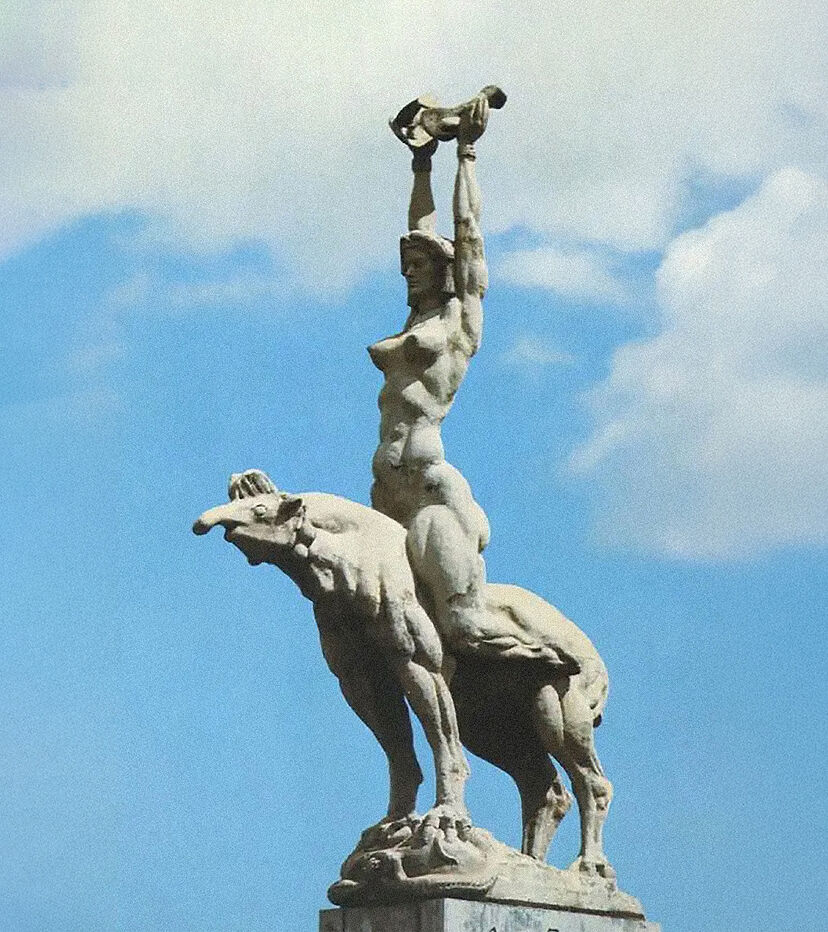
In Venezuela, I grew up with the invisible presence of María Lionza — the daughter of a native Indian chief, something to do with a legend, something to do with a queen, or something magic. El Sentir de María Lionza (The Sentiment of María Lionza) came as a reflective response to the socio-political crisis that invades my native country at this time. This is a time of unrest, as it was at the time of the Spanish Conquest, when this legend takes place.
This is also the latest piece I have written for my friends and colleagues Alberto Almarza and the Cuarteto Latinoamericano. It consists of three movements: El Mensajero, El Río, and Pieles de Metal. The first and second movements are connected with no break between them.
El Mensajero (The Messenger) refers to the story of the Jirjana people, who received a warning: a girl with green eyes would be born, and her eyes would signal bad times to come. If she ever saw her own reflection on a nearby lake, a monstrous giant snake would emerge from her to bring death and destruction. Under this prophecy — just before the Spanish Conquest — a girl with green eyes was born in the village. She was to be sacrificed to the Great Anaconda snake; however, her powerful father saved her and sent her to a secret place where she grew up under the care of twenty-two guardians, who were to prevent her from reaching the lake.
Among several metaphorical messages, I introduce the birdcall of one of our indigenous birds, the Cristofué, thus named for the rhythmic similarity of its song to the spoken words “Cristo fué” (“Christ was” in Spanish). With the Spanish invaders came a new faith. This bird is known in the Americas as the Great Kiskadee, a name again derived from its call, which resembles the French phrase “Qu’est-ce qu’il dit?” (“What is it saying?”). Click here to hear its song.
The second movement, El Río (The River), refers mainly to the realm of waters — gateways to other spheres or the underworld. In the story, María Lionza manages to escape the vigilant guards, runs into the country, and finds a beautiful lake. Fascinated, she sees her own reflection in the water; at that instant, she becomes the giant snake, overflowing the waters and bringing floods and destruction.
In Pieles de Metal (Metal Skins), I wanted to depict the confrontation of two worlds: the Venezuelan indigenous peoples and the Spanish conquerors — a clash that would change both cultures forever.
Multiple versions of María Lionza’s legend exist, but nothing speaks of Venezuelan magical spirituality is stronger than this popular myth. In a way, she represents a unifying element among the different races that blended in the country. Her image fluctuates between that of a native Indian princess and a more European queen, a queen Mary, the great Mother of God.
— Efraín Amaya
Instrumentation & duration
Instrumentation: Flute and string quartet (flute, 2 violins, viola,
cello).
Duration: ca. 12:30.
- I — El Mensajero
- II — El Río
- III — Pieles de Metal
Purchase options
All PayPal buttons below open in the floating cart (top/right on desktop, bottom/right on mobile) so you can combine items before checkout.